

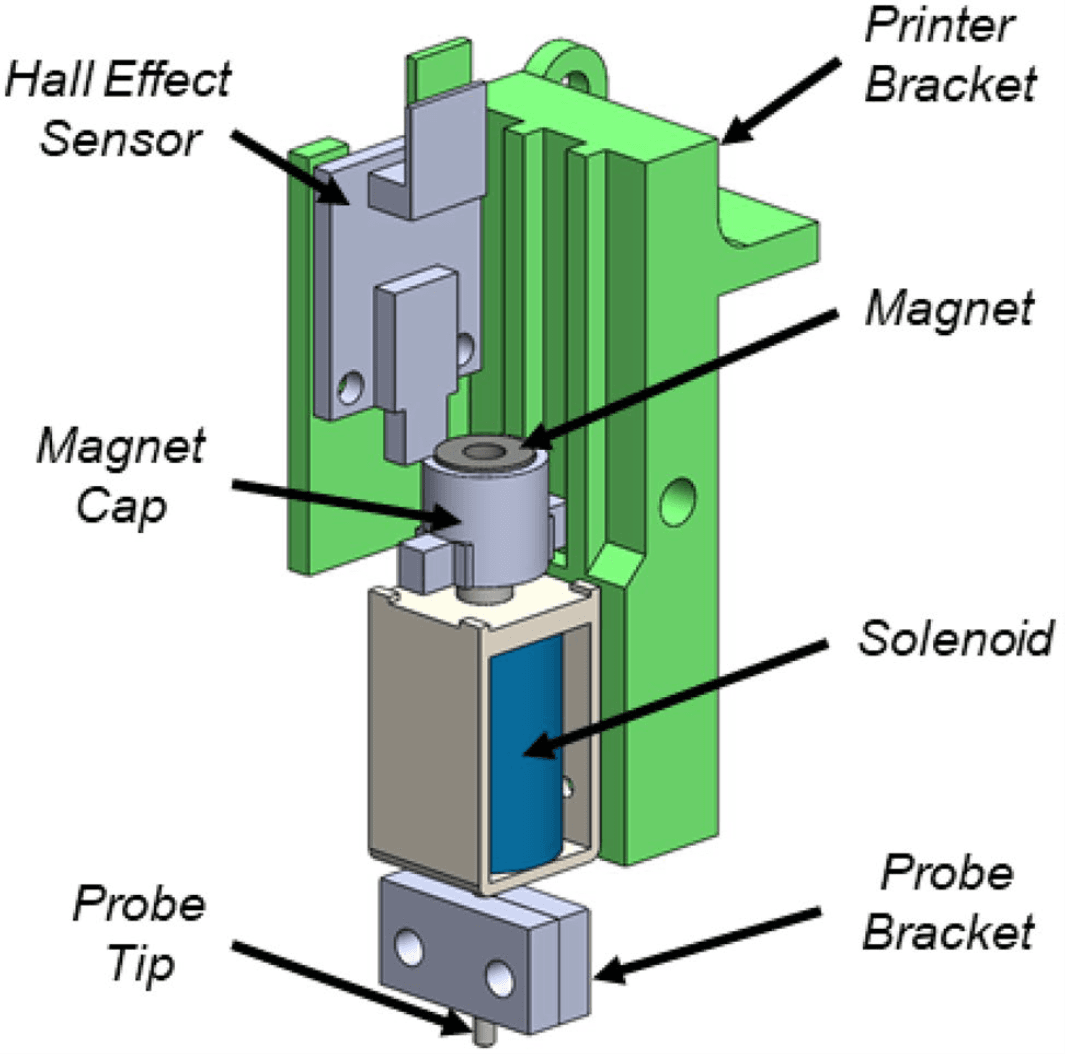
Fig. 1 MTouch sensor
MTouch consists of two main components: the sensor and the controlling software. The sensor detects the presence or absence of print material using a push-pull solenoid, magnet, and hall effect sensor. A diagram of the sensor can be seen in Figure 1. When probing, the solenoid actuates downward. Then the hall effect sensor detects the presence of material using the position of the magnet. The different probing states are shown in Figure 2.
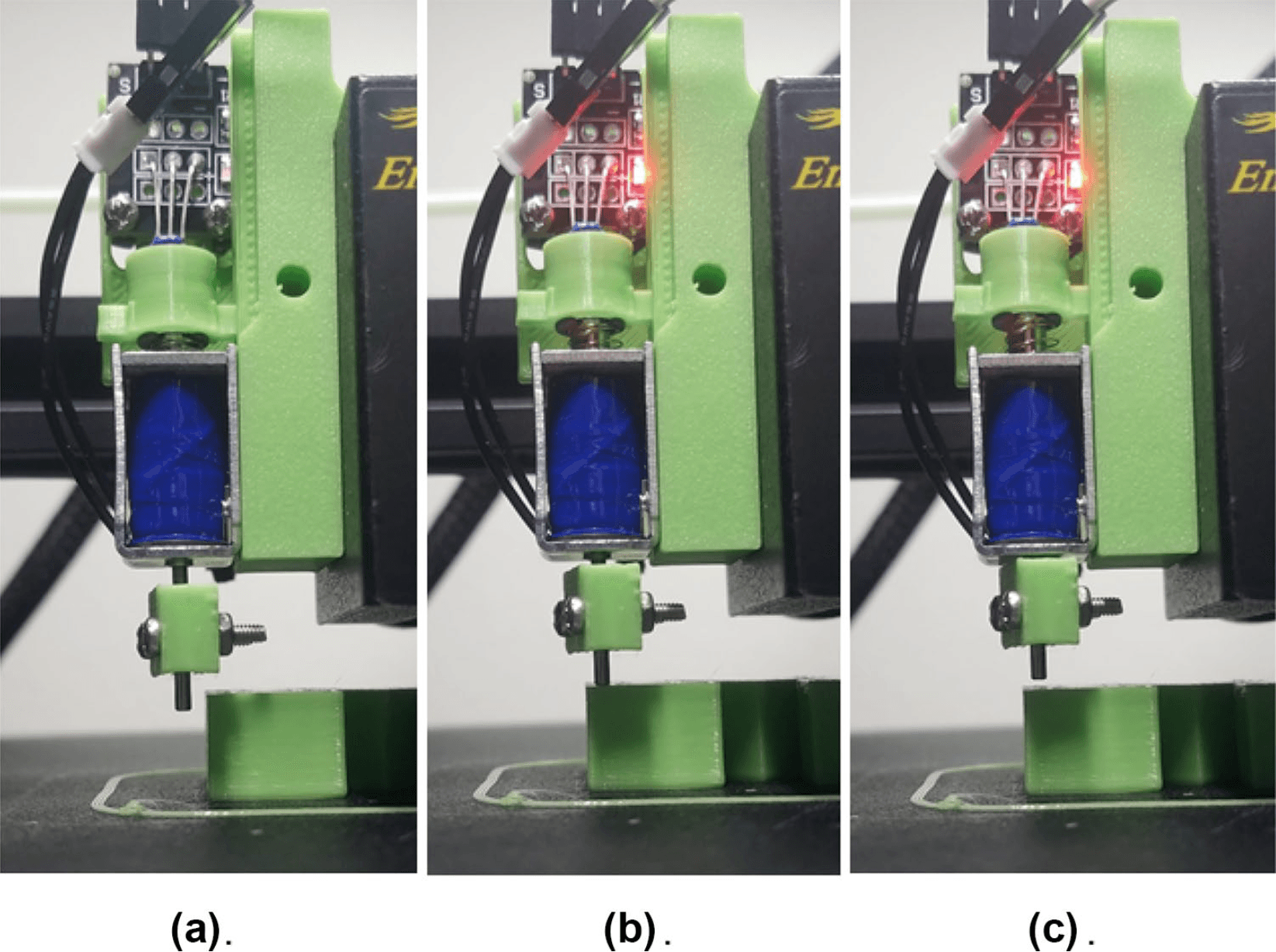
Fig. 2 The three states of the sensor during use: a deployed position not in contact with the print; b deployed position in contact with a print; c stowed position
The software uses a GCODE file to construct a model of the object and generates sample points from the model. An example is shown in Figure 3. The number of sample points generated is proportional to the cross-sectional area of the layer.
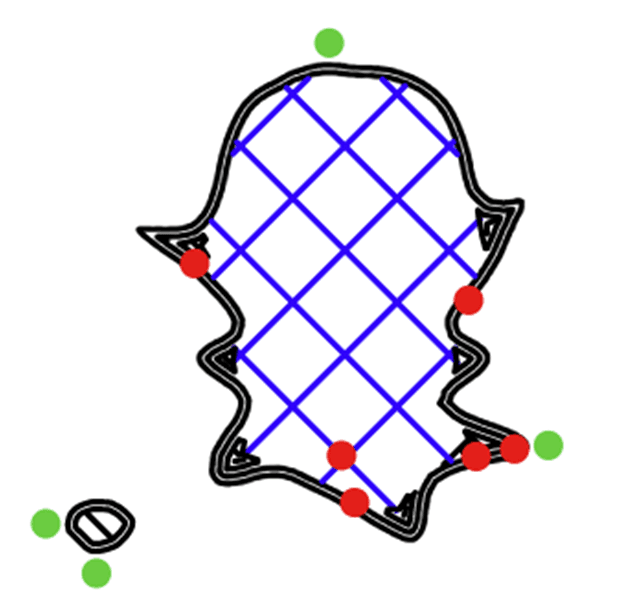
Fig. 3 Sample points generated for a test print. Points where the print is expected to be detected are shown in red; points where the print is not expected are shown in green
Desktop Fused Filament Fabrication (FFF) 3D printers, popular for prototyping, face challenges in detecting print defects. Current solutions are often limited, expensive, or unreliable. MTouch, a low-cost system using an actuated contact probe, was created to address this issue achieving near 100% accurate defect detection of common print failures such as layer shifting, bed separation, and filament runout with minimal impact to print time.
MTouch consists of two main components: the sensor and the controlling software. The sensor detects the presence or absence of print material using a push-pull solenoid, magnet, and hall effect sensor. A diagram of the sensor can be seen in Figure 1. When probing, the solenoid actuates downward. Then the hall effect sensor detects the presence of material using the position of the magnet. The different probing states are shown in Figure 2.
The software uses a GCODE file to construct a model of the object and generates sample points from the model. An example is shown in Figure 3. The number of sample points generated is proportional to the cross-sectional area of the layer.
Fig. 1 MTouch sensor
Fig. 2 The three states of the sensor during use: a deployed position not in contact with the print; b deployed position in contact with a print; c stowed position
Fig. 3 Sample points generated for a test print. Points where the print is expected to be detected are shown in red; points where the print is not expected are shown in green
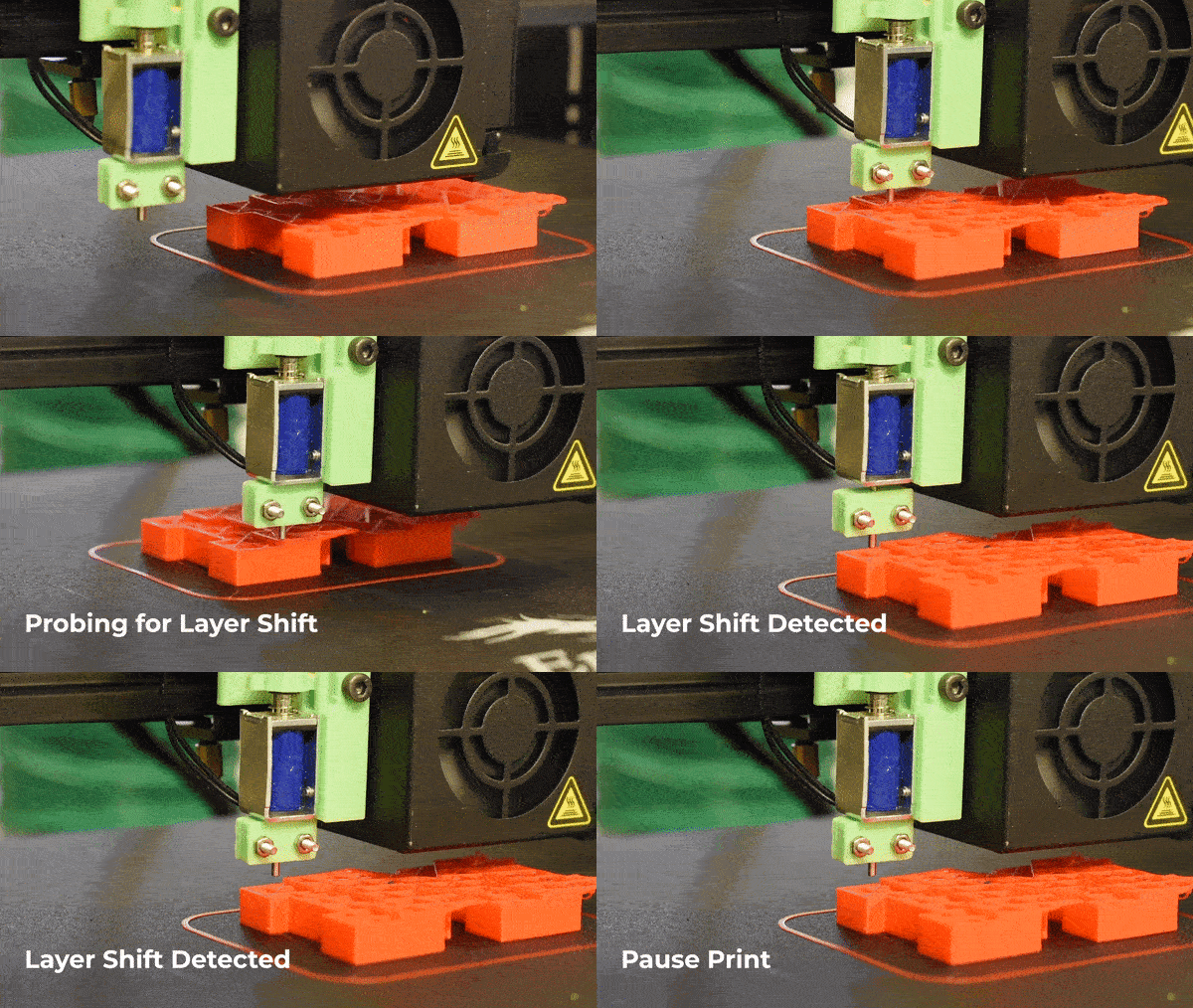
Fig. 4 MTouch in action - layer shift detection
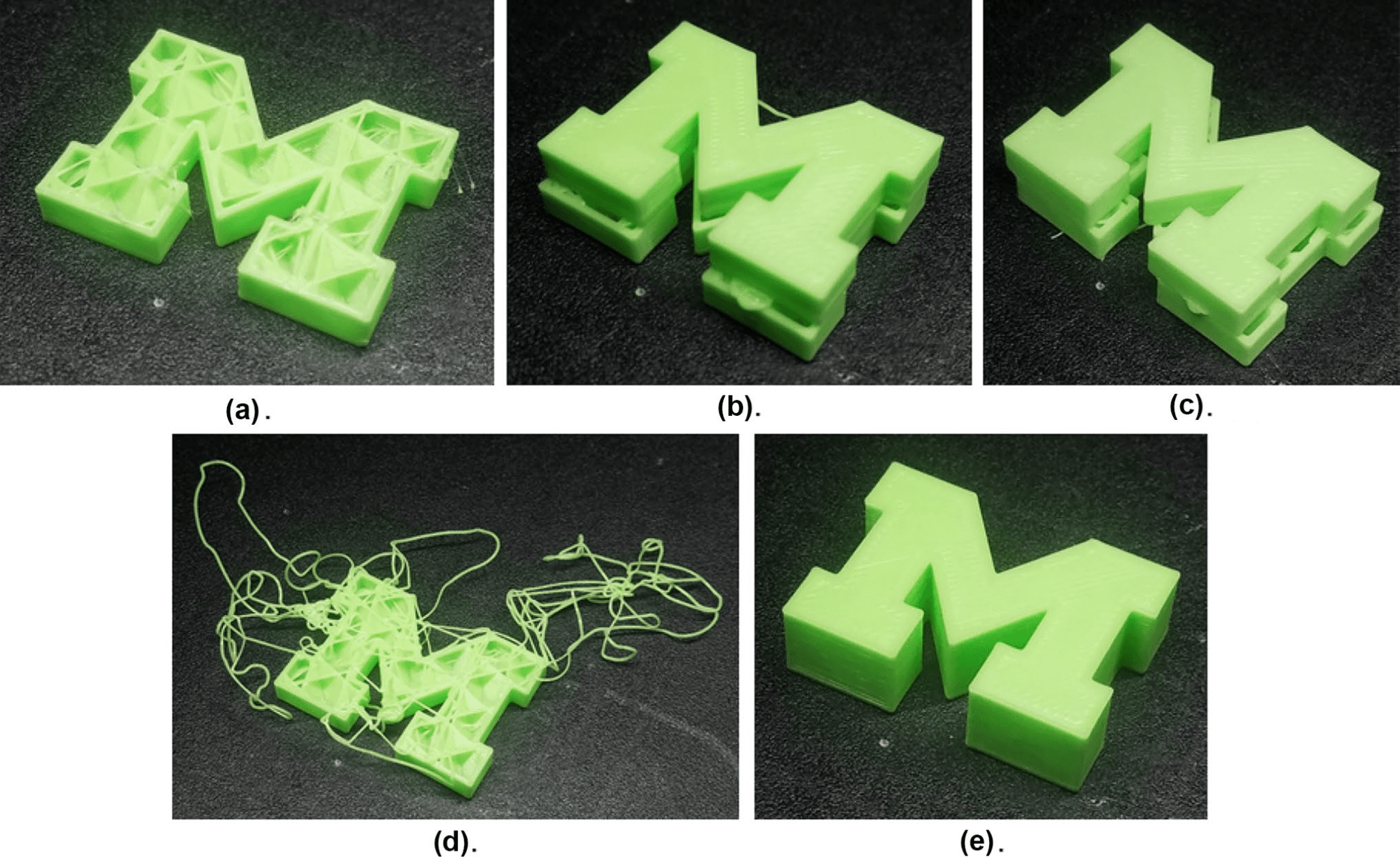
Fig. 5 Examples of all the faults tested in the fault detection validation tests: a filament runout/jam, b Y axis layer shift, c X axis layer shift, d bed separation, e no defects